Admission Enquiry 
Admission Enquiry

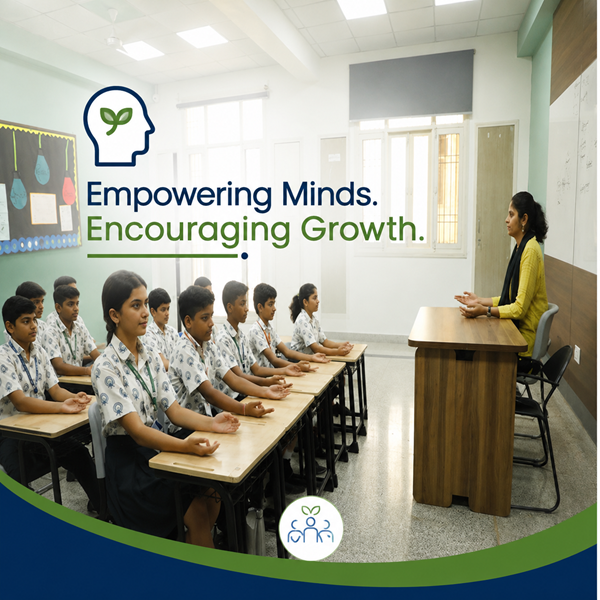
Every teacher has faced a moment in the classroom where they wondered Why is this student struggling even though I have explained the concept three times? Why does one child thrive while another seems completely disconnected? The answer to these questions rarely lies in the content being taught. More often, it lies in how the human mind learns, develops, and responds to the environment around it. This is exactly where educational psychology steps in.
Educational psychology is the scientific study of how people learn in educational settings. It examines the emotional, cognitive, social, and developmental factors that influence learning. For teachers, understanding these principles is not just an academic exercise; it is one of the most practical tools available for making real differences in students' lives. Schools that prioritize psychology-informed teaching, like Mayoor School Jaipur for your child's education, demonstrate how a strong academic philosophy, when grounded in research, can produce consistently exceptional outcomes. Whether you are a seasoned educator or just starting, insights from educational psychology can completely transform your approach to teaching.
At its core, educational psychology bridges the gap between psychological theory and classroom practice. It draws from developmental psychology, cognitive science, behavioral theory, and social psychology to help educators understand their students as whole human beings, not just recipients of information.
The importance of educational psychology cannot be overstated. It gives teachers a framework to design classrooms where Activity-Based Learning thrives, moving students away from passive listening and toward genuine exploration. Specifically, it equips educators to:
In short, it is the science behind good teaching. Without understanding how students think, feel, and process information, even the most well-prepared lesson can fall flat.
The role of educational psychology in the teaching-learning process is both foundational and far-reaching. It does not just inform how a lesson is designed; it influences every single interaction between a teacher and a student.
Jean Piaget's theory of cognitive development, for instance, taught educators that children at different ages are literally capable of different types of thinking. A six-year-old cannot process abstract concepts the same way a fifteen-year-old can. This is one reason why curriculum design matters so deeply and why parents often research CBSE vs ICSE vs IB board differences before choosing a school for their child. When teachers understand the cognitive stage of their students, they can pitch lessons at the right level, challenging enough to stimulate growth, but not so difficult that it causes frustration or disengagement.
One of the biggest challenges in classrooms today is keeping students motivated. Educational psychology offers deep insights into intrinsic and extrinsic motivation. Students who are intrinsically motivated, who learn because they find it genuinely interesting, retain information longer and perform better than those motivated only by grades or rewards.
Teachers who understand motivational theory can design activities that spark curiosity, give students a sense of autonomy, and help them see the real-world relevance of what they are learning. Pairing this with modern resources such as the 5 Free AI Tools for Students that are now widely available can further boost engagement and make self-directed learning feel exciting rather than overwhelming. Something as simple as giving students a choice in how they present an assignment can significantly increase their investment in the work.
No two students are alike. Some are visual learners, others are auditory or kinesthetic. Some students have dyslexia or ADHD; others are gifted and bored. Educational psychology equips teachers with tools to identify these differences and adjust their instruction accordingly. Differentiated instruction, a strategy deeply rooted in educational psychology, ensures that all students, regardless of their starting point, have access to meaningful learning opportunities.
Behavioral theories, particularly those associated with B.F. Skinner and operant conditioning have long informed classroom management strategies. Positive reinforcement, clear expectations, and consistent consequences are all grounded in psychological research. Modern tools also play a role here. Understanding the Benefits of Smart Boards in the Classroom, for example, can help teachers create more interactive, visually stimulating lessons that naturally reduce restlessness and keep students focused. A calm and structured environment is not just about discipline; it is a prerequisite for effective learning.
One of the most powerful contributions of educational psychology to classroom practice is the science of memory and retention. Research on how the human brain encodes, stores, and retrieves information has led to the development of highly effective teaching and study strategies.
Spaced repetition, for example, is a technique backed by decades of research showing that reviewing material at increasing intervals dramatically improves long-term retention. Similarly, retrieval practice, testing yourself on material rather than simply re-reading it, is one of the most effective study methods available. Teachers who incorporate these evidence-based strategies into their lessons give students a genuine academic advantage.
For those who want to dive deeper into these strategies and theories, an educational psychology study guide can be an invaluable resource not just for students studying the subject but for educators who want to continuously refine their practice.
Learning does not happen in an emotional vacuum. A student who is anxious, hungry, bullied, or dealing with family stress at home is not going to absorb a history lesson effectively, no matter how well it is taught. Educational psychology acknowledges this reality and pushes teachers to think about the whole child.
Abraham Maslow's Hierarchy of Needs, a cornerstone concept in educational psychology, reminds educators that students must have their basic physiological and safety needs met before they can engage meaningfully with learning. This is part of why structured, supervised environments like a Day Boarding School in Jaipur can be so beneficial; they provide consistency, nutrition, and emotional support alongside academics. Teachers who build trusting relationships with their students are not just being kind; they are doing something psychologically essential.
Social learning theory, developed by Albert Bandura, adds another layer. Students do not just learn from their teachers; they learn from watching and interacting with each other. Collaborative learning, peer teaching, and group projects are all rooted in this understanding. When teachers design social learning opportunities, they tap into a powerful and often underutilized mode of education.
How teachers assess and give feedback has a profound psychological impact on students. Educational psychology has shown that feedback that focuses on effort and process rather than fixed ability encourages what Carol Dweck calls a "growth mindset." Students who believe their intelligence can be developed through hard work and persistence are more resilient, more willing to take on challenges, and ultimately more successful learners.
Formative assessment, an ongoing, low-stakes evaluation of student understanding, is another tool rooted in educational psychology. Rather than waiting until the end of a unit to discover that students did not understand a concept, formative assessment allows teachers to catch gaps early. For students preparing for high-stakes evaluations, such as the CBSE Compartment Exam 2026, this kind of early intervention can be the difference between falling behind and finishing strong. This approach fundamentally changes the dynamic from "teach and test" to "teach, check, and adapt."
Inclusive education, the practice of educating all students, including those with disabilities or special needs, in the same classroom, is one of the most significant applications of educational psychology in modern schooling. It requires teachers to understand not just academic differences but also sensory, cognitive, and emotional ones.
Howard Gardner's theory of multiple intelligences is particularly useful here. Gardner proposed that intelligence is not a single fixed trait but rather a collection of distinct abilities: linguistic, logical-mathematical, spatial, musical, bodily-kinesthetic, interpersonal, intrapersonal, and naturalistic. A student who struggles with traditional academic tasks may have exceptional abilities in music or spatial reasoning. Teachers who recognize and celebrate these different intelligences create classrooms where more students feel valued and capable.
Understanding the importance of educational psychology becomes especially clear when working with students who have learning challenges. Schools that embed psychological principles into their everyday teaching culture consistently produce better student outcomes, which is why psychology-informed schooling is a key factor to consider when researching the Best school in Jaipur in 2026. A teacher equipped with psychological knowledge can identify early warning signs of learning disorders, communicate effectively with parents, and collaborate with specialists to create individualized support plans that actually work.
Understanding theory is one thing; applying it in a real classroom with thirty energetic students is another. Here are some practical, psychology-backed strategies that teachers can begin using today:
These are not radical changes. They are small, deliberate shifts informed by decades of research, and they can make a meaningful difference in student engagement, confidence, and achievement.
Teaching is both an art and a science. The art lies in building relationships, inspiring curiosity, and creating moments that students carry with them for life. The science, the knowledge that makes all of this possible, is rooted in educational psychology.
When teachers understand how students develop cognitively, what drives their motivation, how memory works, and what emotional safety looks like, they do not just deliver content. They change lives. The principles of educational psychology remind us that every student has the capacity to learn and grow, and that a skilled teacher is one of the most important factors in unlocking that potential.
Whether you are a new teacher building your foundation or an experienced educator looking to sharpen your skills, investing time in learning and applying educational psychology principles is one of the highest-return actions you can take. And for parents, understanding these principles can also guide better school choices. Knowing which institutions genuinely practice what they preach is easier when you know what to look for, which is why resources like our guide on the Best school in Jaipur with fee structure can be a helpful starting point for making an informed decision.
Educational psychology is the study of how people learn. It looks at the mental, emotional, and social processes involved in learning and uses that understanding to help teachers teach more effectively and students learn more successfully. Think of it as the science that explains what is really happening inside a student's mind during a lesson.
The importance of educational psychology for teachers lies in its practical value. It helps educators understand why students behave or learn differently, how to motivate them, how to give effective feedback, and how to manage a classroom in a way that supports learning. Without this knowledge, teachers are often working in the dark, relying on instinct alone rather than research-backed approaches.
Some of the most influential theories in educational psychology include Piaget's theory of cognitive development, Vygotsky's Zone of Proximal Development, Bandura's social learning theory, Skinner's behavioral theory of operant conditioning, and Maslow's Hierarchy of Needs. Each offers a different lens for understanding students and improving teaching practice.
Educational psychology provides frameworks for identifying, understanding, and supporting students with learning difficulties such as dyslexia, ADHD, or processing disorders. It helps teachers implement differentiated instruction strategies and collaborate with parents to create personalized learning plans. Parents looking to start early can also explore the CBSE Admission Process Jaipur 2026 to find schools equipped with the right support systems from day one.
General psychology is a broad field covering the study of human behavior, thought, and emotion across all contexts of life. Educational psychology is a specialized branch that focuses specifically on learning and education. It applies psychological theories and research to understand how students develop, how they learn best, and how teachers can create optimal environments for that learning to happen.
Classroom management strategies are heavily influenced by behavioral psychology and educational psychology research. Understanding how positive reinforcement works, why students seek attention, and how structure and routine reduce anxiety allows teachers to proactively create a calm, respectful classroom environment. Rather than simply reacting to disruptive behavior, psychologically informed teachers design conditions where disruptive behavior is less likely to occur in the first place.
Absolutely. In online and hybrid learning environments, the principles of educational psychology are arguably even more important. Without the natural social cues of a physical classroom, students can feel isolated and lose motivation quickly. Understanding how to build online communities, use multimedia to match different learning styles, maintain engagement through retrieval practice, and provide timely emotional support are all critical and all grounded in educational psychology.

Copyright ©2025 held by Global Institute of Technology Society and Mayoor School Jaipur | This template is made with by Shopivana
