Admission Enquiry 
Admission Enquiry
Pick up a pen right now and try writing your own name. Notice how it feels: the slight drag of ink on paper, the small pauses between letters, the tiny decisions your hand makes without you even thinking about them. For most of human history, this was simply how people thought, learned, and remembered things. Today, it is becoming a rare event. Surveys on writing habits suggest that a large share of adults now go weeks or months without picking up a pen for anything beyond a signature, and just as many admit they can barely read someone else's cursive anymore. The art of handwriting, once a basic life skill taught to every child, is slowly slipping away, replaced by keyboards, touchscreens, and voice notes. This blog looks at why that quiet disappearance matters more than it seems, and why the art of beautiful handwriting deserves a place in every child's education even in 2026.
It is tempting to treat handwriting as a nostalgic skill, something charming but no longer necessary now that typing is faster and more convenient. Yet a growing body of research into how the brain works tells a very different story. Forming letters by hand is not just a motor task; it activates memory, language, and attention systems in ways that tapping a screen simply does not.
When a child writes a letter by hand, several regions of the brain work together at once; the areas responsible for movement, vision, and language processing all fire in coordination. This layered activity is what researchers call a multisensory experience, and it is believed to strengthen the neural pathways associated with memory and comprehension. This is one reason many teachers still ask students to take notes by hand during lessons rather than typing them, even at a Top School in Jaipur where classrooms are otherwise thoroughly modern and tech-enabled.
There is something freeing about a blank page and a pen. Without autocorrect suggesting the next word or predictive text nudging a sentence in a particular direction, the mind is left to wander, connect ideas, and experiment with language on its own terms. Many writers, students, and even working professionals say their best ideas still show up first in a notebook, long before they ever reach a keyboard.
Handwriting is slow by design, and that is precisely its value. It cannot be rushed the way typing can, and it does not allow for the constant switching between tabs, notifications, and apps that defines most digital work today. The simple act of forming words on paper forces sustained attention, which in turn builds the kind of deep focus that benefits everything from exam preparation to long-term learning.
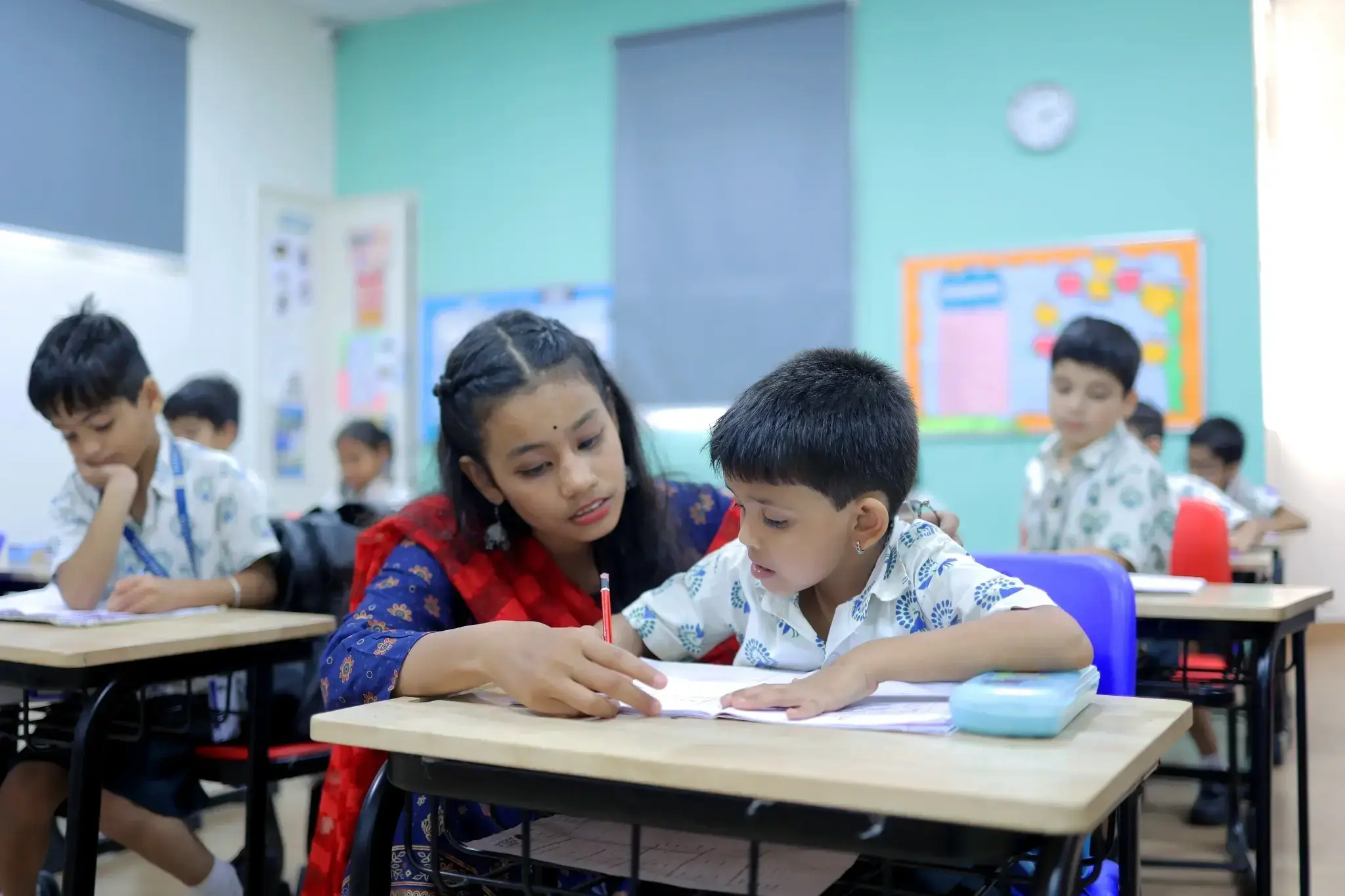
For younger children in particular, handwriting is a workout for fine motor skills. Gripping a pencil, controlling pressure, and guiding a hand smoothly across a line all strengthen the same muscles and coordination used later in activities ranging from playing an instrument to tying shoelaces. Occupational therapists frequently point to early handwriting practice as one of the simplest ways to build this dexterity before children even realize they are learning it.
There is a reason journaling by hand has stayed popular even in an age of note-taking apps. The slow, rhythmic motion of writing has a calming effect that typing rarely replicates, and it gives children and adults alike a private space to process emotions without the pressure of a screen staring back at them.
It would be easy to reduce this conversation to penmanship contests and neat cursive loops, but the art of beautiful handwriting is really about something deeper: individuality. No two people form their letters the same way, and that personal signature, quite literally, is part of how children build a sense of identity and ownership over their own work. A well-formed handwriting style is not just pleasant to look at; it reflects patience, discipline, and a level of care that rushed typing rarely conveys. Schools that continue to invest in this skill, alongside strong academics, tend to raise students who are more confident communicators, both on paper and off it. This is part of why families exploring CBSE School Admissions often ask specifically about how a school balances traditional skills like handwriting with modern digital learning tools.
Bringing handwriting back into daily school life does not require abandoning technology; it simply means making room for both. A few approaches that genuinely work:
Schools that structure their School Programs in Jaipur around this kind of balanced approach tend to produce students who are equally comfortable with a pencil and a keyboard, rather than losing one skill in favour of the other.
At Mayoor School Jaipur, handwriting instruction is woven into the broader curriculum rather than treated as an afterthought. Teachers encourage students to write by hand during key learning moments, not because technology is discouraged, but because both skills genuinely complement each other. This balance reflects the same inclusive philosophy that shapes the school's approach as a Best CBSE School in Jaipur for Special Education Needs, where personalized attention helps every child, regardless of learning style, build confidence with foundational skills like handwriting at their own pace.
The same philosophy carries through into the school's international offerings as well. Even within a Best IB School in Jaipur environment, where research, inquiry, and independent thought are central to the curriculum, handwriting continues to play a quiet but important role in how students draft ideas, take notes, and organize their thinking before it ever reaches a screen.
For families weighing a full-day academic and activity schedule, the structure offered by a Best Day Boarding School in Jaipur also gives children the extra time needed to practice skills like handwriting without it competing with an already packed evening at home.
Rediscovering handwriting does not require a formal class. Try this small exercise at home or in the classroom:
Compare that experience to typing the same thought on a phone. Most people notice the difference immediately, and children especially tend to enjoy the novelty of it.
Handwriting is a quiet skill, easy to overlook until it is gone. It shapes memory, nurtures focus, supports emotional wellbeing, and gives every child a small, personal way to express who they are. As schools continue to modernize, the goal should not be choosing between pen and keyboard, but preserving space for both.
Parents who want to see this balance in action are welcome to browse the Mayoor School Jaipur Photo Gallery for a glimpse of everyday classroom life.
For the latest updates on how these values show up in real activities throughout the year, families can also check Mayoor School News regularly.
For families researching options more broadly, a look at theBest School in Jaipur can help clarify what a genuinely well-rounded education looks like, one where timeless skills like handwriting are given just as much respect as the latest classroom technology.
Cost is naturally part of that decision too, and parents comparing options for the best school in Jaipur with fee structure that fits their budget will find that quality handwriting instruction, like most strong foundational teaching, does not have to come at a premium.
Handwriting engages memory, motor skills, and attention in ways that typing does not fully replicate. It supports deeper learning, especially in young children who are still developing core cognitive and physical skills.
Most educators recommend introducing basic pencil control and letter formation around age three to four, with more structured handwriting instruction typically beginning in the early primary years.
It can, indirectly. Illegible handwriting sometimes leads to lower marks in written exams simply because answers are hard to read, and slow, effortful writing can also affect how much a child manages to complete within exam time limits.
Yes. Most schools today successfully teach both side by side. The key is intentional balance, using handwriting for specific tasks like note-taking or journaling while allowing typing for longer projects and research work.
Handwriting is a practical, everyday skill used for communication and learning, while calligraphy is a more decorative art form focused on stylized lettering. Good handwriting does not require calligraphy-level flourish to be effective or legible.
Simple, low-pressure activities work best: short journaling, handwritten letters to family, or even grocery lists written by hand. The goal is consistency and enjoyment rather than perfection.
For many children, yes. Structured, multi-sensory handwriting practice is often used as part of broader learning support strategies, though specific approaches should always be guided by a qualified educator or therapist based on the child's individual needs.
Copyright ©2026 held by Global Institute of Technology Society and Mayoor School Jaipur | This template is made with by Shopivana
