Admission Enquiry 
Admission Enquiry

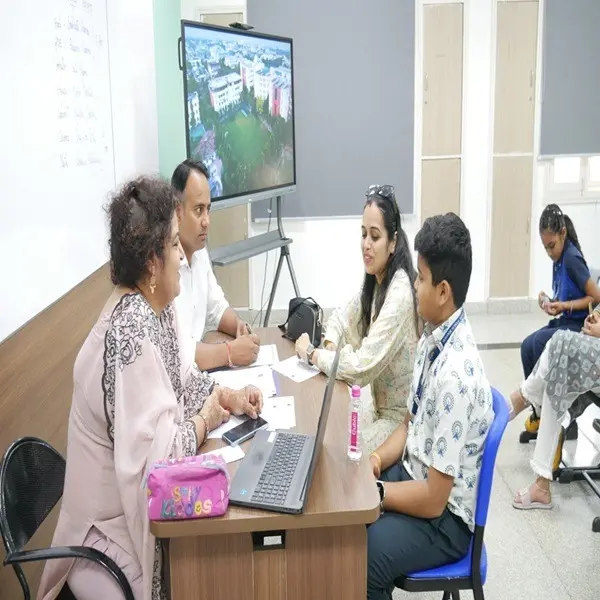
Choosing the right school for your child is one of the most meaningful decisions you will ever make as a parent. But let's be honest, it's also one of the most confusing. With polished brochures, impressive-sounding programs, and stunning campuses competing for your attention, it's easy to get pulled in the wrong direction. If you're currently researching the best school in Jaipur or anywhere else, this guide is written specifically for you. We'll walk through the most common mental traps parents unknowingly fall into and how you can sidestep them to make a truly informed choice.
A mind trap is a thinking pattern that feels logical in the moment but actually leads you away from what truly matters. When it comes to school selection, these mental shortcuts are everywhere. They're driven by social pressure, fear, incomplete information, and the very human tendency to judge what we can see over what we cannot.
Understanding these traps isn't about blaming yourself; every parent falls into at least one of them. It's about slowing down, asking better questions, and trusting the right instincts.
Many schools are masters at presenting a seamless picture of perfection, uniform systems, glossy achievement boards, and tightly scripted open-day presentations. And parents are naturally drawn to it. We want reassurance that there's a proven system in place.
But here's the truth: no rigid system, however polished, can nurture every child equally. Children are not products on an assembly line. A school that prides itself on fitting every student into the same mould is actually describing its limitation, not its strength.
What to look for instead: Ask how the school supports children who learn differently, who struggle socially, or who excel in areas outside academics. The answer will reveal the institution's true culture.
Sprawling campuses, Olympic-sized pools, and high-tech auditoriums, these features can take your breath away during a school tour. And schools know this. Infrastructure is designed, at least partly, to impress parents.
But consider this: how often do students actually use these facilities in a meaningful, curriculum-integrated way? A beautiful auditorium that hosts two events a year adds little to your child's daily learning. What truly shapes a child's education happens in the classroom, in the quality of conversations between teachers and students, in the encouragement given after a failed test, and in the curiosity that is either sparked or suppressed.
A leaky roof in a school full of passionate, caring teachers will do more for your child than a marble corridor in an institution where learning is transactional.
Schools today love to announce "revolutionary teaching methods," "future-ready frameworks," and "holistic learning models." These terms sound impressive, but they rarely come with evidence of actual student outcomes.
Before you're swayed by claims about the curriculum, ask: Has this approach been evaluated? Are there measurable improvements in student confidence, creativity, or academic growth? If the school cannot answer these questions clearly, the innovation may be more marketing than method.
One framework worth understanding in depth is"What Is an Integrated Curriculum," which connects different subjects to create more meaningful learning experiences. Not every school that claims to offer it truly delivers it.
Every school has a few exceptional students, the ones who topped national exams, won state-level competitions, or got into prestigious universities. Schools are very good at amplifying these stories. And understandably so.
The problem arises when these isolated successes are presented as representative of the entire school's output. When you hear a school celebrate its "top achievers," ask yourself: What about the average student? What does their journey look like? How does the school support the child who isn't the top performer but is working incredibly hard?
Great schools have success stories across the spectrum, not just at the top. They help every child find their own version of achievement, whether in academics, sports, the arts, or character development.
This one is subtle but important. Some schools, often the ones with the most inflated reputations, can be quietly resistant to parents who ask too many questions. Parents who raise genuine concerns about academic standards, safety, teacher turnover, or administrative transparency may find themselves politely sidelined or made to feel like troublemakers.
This "we know best, trust us" attitude is a red flag. Great schools don't just tolerate parental involvement; they actively encourage it. They know that when parents and educators work as genuine partners, children thrive. The best educational environments are those where parents feel heard, valued, and informed.
School rankings and awards feel like the objective truth. If a school is ranked highly, surely it must be excellent, right? Unfortunately, rankings are often based on narrow criteria: board exam results, fee structures, or marketing budgets. They rarely capture teacher quality, student wellbeing, school culture, or how genuinely happy children are each day.
Instead of relying on rankings alone, speak with parents whose children currently attend the school. Ask them honestly whether they would choose the same school again. Their answers will tell you more than any list.
Before choosing a school, turn the lens inward. Every child is different, and the best school for your neighbour's child may not be the best school for yours. Take time to understand your child's learning style, interests, and temperament. If you haven't already, our guide on How to Identify Your Child's Strengths is a great starting point for this self-reflection.
Children who love physical activity may flourish in an institution that prioritises both academics and athletics. In fact, parents sometimes overlook how profoundly sports can shape a child's discipline, teamwork, and resilience, making the choice of a school with a strong sporting culture particularly valuable for such children.
If your child has a strong athletic inclination alongside academic interests, exploring the best sports school in Jaipur could open doors you hadn't previously considered.
One of the most underrated indicators of a school's quality is how it approaches reading not as a subject, but as a lifelong habit. Schools that invest in reading culture, library time, and independent reading programmes are quietly giving children one of the most powerful tools for lifelong success.
As a parent, you can reinforce this at home too. If you're looking for practical ways to get started, our blog on How to Build Strong Reading Habits in Children offers actionable, research-backed tips that you can begin this week.
Ask prospective schools how they nurture a love of reading beyond the textbook. The answer or the absence of one will tell.
After you've seen through the illusions, what should you actually be looking for? The answer is simpler than you might think: people and culture.
The teachers. Are they passionate? Do they know their students by name, not just their grades? Do they look energised or exhausted? Teacher satisfaction is one of the most reliable proxies for school quality, because happy, supported teachers create better learning environments.
The culture. Walk the corridors. Watch how students interact with each other and with staff. Is there warmth? Curiosity? Respect? A great school feels alive, purposeful, kind, and genuinely focused on children rather than performance metrics.
The values. Ask the school directly: What do you believe education is for? Their answer should go beyond exam results. It should speak to character, compassion, creativity, and preparing children for a life well-lived, not just a career well-started.
Prepare these questions before your next school visit:
These questions won't always produce perfect answers, but the quality and openness of the response will give you a very clear sense of whether a school is built on substance or on show.
Choosing a school is not about finding the most impressive institution; it's about finding the right environment for your specific child. The child who needs to be challenged. The child who needs encouragement. The child who needs space to make mistakes and the grace to learn from them.
See beyond the grand buildings, the curated brochures, and the polished success stories. Look instead for warmth in the teachers' eyes, purpose in the school's philosophy, and joy in the students' faces. Those are the things that cannot be faked and that matter most.
At Mayoor School Jaipur, we believe that a great education is not about moulding children into high achievers; it's about helping every child become the fullest, most confident version of themselves. If that resonates with you, we'd love to show you what education looks like when it's built on people, values, and genuine care. Visit us or reach out; we're always happy to have real conversations with parents who ask real questions.
Read more articles from the director’s desk of Mayoor School Jaipur!
Mind traps are unconscious thinking patterns that lead parents to make school choices based on appearances, such as infrastructure, rankings, or selective success stories, rather than on what truly benefits their child. Being aware of them helps you ask better questions and make more informed decisions.
Start by understanding your child's unique learning style, strengths, and interests. Then visit schools during regular hours (not just open days), speak with current parents, observe teacher-student interactions, and ask pointed questions about how the school supports average and struggling students, not just top performers.
Impressive facilities are visible and easy to judge, but they don't directly determine educational quality. What shapes a child's learning are teacher quality, classroom culture, and the values the school actively models. A school with great infrastructure but poor teaching culture will underserve your child.
A school that values parents will welcome questions, have clear communication channels, actively seek feedback, and treat concerns as valid rather than disruptive. If a school makes you feel like an outsider during the admissions process, that attitude is unlikely to change once your child is enrolled.
Rankings can provide a starting point, but they are based on narrow criteria and rarely reflect the full picture. They often miss teacher wellbeing, student happiness, school culture, and the quality of pastoral care. Always supplement rankings with personal visits and conversations with current parents.
Sports play a vital role in building discipline, resilience, teamwork, and mental health. For children with a strong athletic inclination, a school with a robust sports programme can be transformative not only physically but also academically and socially. It's a factor often underweighted by parents focused purely on academic rankings.
Look for schools where teachers are given the autonomy, training, and support to grow professionally. When educators are respected and invested in, they bring that energy into the classroom. Ask about professional development programmes, teacher tenure, and how the school handles teacher wellbeing. These are strong indicators of a healthy learning environment.

Copyright ©2026 held by Global Institute of Technology Society and Mayoor School Jaipur | This template is made with by Shopivana
