Admission Enquiry 
Admission Enquiry
Education in India is undergoing a remarkable transformation. Parents today are no longer satisfied with traditional teaching methods that focus only on memorization and examinations. They want schools that prepare children for real-world challenges, leadership opportunities, creativity, communication, and lifelong success. This growing demand has significantly increased the popularity of experiential learning schools across the country.
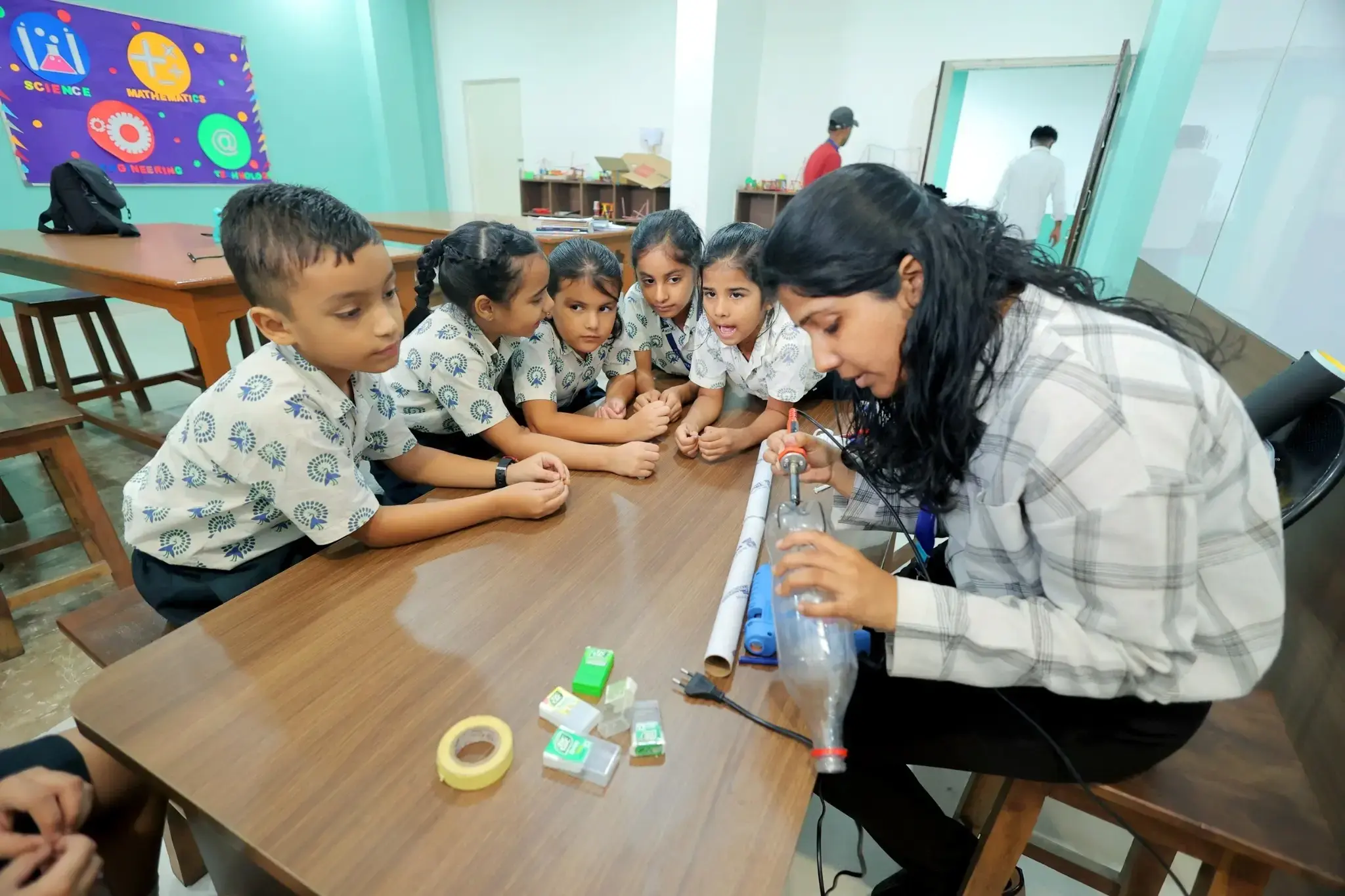
Experiential learning focuses on “learning by doing.” Instead of simply reading concepts from textbooks, students actively participate in projects, experiments, group discussions, field visits, research activities, innovation labs, and collaborative learning experiences. This approach improves understanding, builds confidence, and helps children apply knowledge in practical situations.
In recent years, parents have increasingly preferred experiential learning schools in India because these institutions nurture academic excellence along with emotional intelligence, creativity, leadership, and problem-solving skills. Schools adopting experiential learning methodologies encourage students to explore concepts through practical engagement, making education more meaningful and enjoyable.
Mayoor School Jaipur has emerged as one of the leading experiential learning schools, successfully combining strong CBSE academics with innovation-driven education. The school focuses on developing future-ready students through activity-based learning, digital integration, co-curricular participation, and holistic development initiatives. Parents searching for the best school in jaipur with fee structure often prefer institutions like Mayoor School Jaipur that provide balanced academic and personal growth opportunities.
Experiential learning is an educational philosophy where students gain knowledge through direct experiences and active participation. Unlike conventional rote learning methods, experiential education encourages children to observe, analyze, experiment, collaborate, and apply concepts practically.
This modern teaching methodology transforms classrooms into interactive learning environments where students become active participants rather than passive listeners. Through practical exposure, students not only understand concepts better but also retain knowledge for longer periods.
Experiential learning includes:
An effective experiential learning primary school helps children develop curiosity, creativity, and confidence from an early age. Students learn communication skills, teamwork, adaptability, and emotional intelligence while engaging in meaningful learning experiences.
Research has shown that experiential learning improves:
Parents searching for the best school for admission are increasingly choosing institutions that integrate experiential teaching methodologies with structured CBSE academics. Schools that balance academic performance with practical exposure help children become confident and future-ready individuals.
The world is changing rapidly due to technological advancements, artificial intelligence, automation, and evolving career opportunities. Students in 2026 require more than textbook knowledge to succeed in competitive global environments. They need practical exposure, adaptability, communication skills, leadership qualities, and innovative thinking.
Traditional education methods often focus heavily on examination performance while neglecting real-world application. Experiential education bridges this gap by preparing students to handle challenges beyond classrooms.
Top experiential learning schools in India are integrating advanced educational practices such as:
These schools aim to create well-rounded individuals who can confidently face academic, professional, and personal challenges.
Experiential learning also promotes:
Children exposed to experiential learning environments become more engaged in academics because they understand the relevance of concepts in real life. They learn to ask questions, solve problems, and collaborate effectively with peers.
Heritage exemplifies CBSE / IGCSE / IB learning through experiential initiatives like Raahgiri Days, student-led civic campaigns, and the Muskan Project, which integrates creative, community‑driven education into public schools.
School Website -https://heritagexperiential.org/
Situated in Jaipur, Mayoor School embraces experiential pedagogy at its core. With hands‑on learning labs, environmental projects in the desert ecosystem, and a dynamic community service programme, students engage actively in meaningful activities that reflect the ethos of learning through doing. As a flagship experiential learning school in Rajasthan and a trusted name in Jaipur for CBSE education, Mayoor continues to innovate curriculum design and holistic child development.
School Website -https://mayoorschooljaipur.org/
Walden follows a studio‑based, inquiry‑driven pedagogy, inspired by Dewey and Krishnamurti philosophies. Its student‑designed studio labs for Science, Mathematics and Literature promote multiple problem‑solving strategies and experiential exploration.
School Website -https://walden.edu.in/
Known for its "Inventuring" week, where students build infrastructure and collaborative spaces, Inventure uses MakerSpaces, cross-disciplinary design tasks, and genuine project work from day one. The school aligns its experiential curriculum with IGCSE and AS/A‑Level frameworks.
School Website -https://www.inventureacademy.com/
Through its Anubhuti residential programmes, Somaiya students engage in cultural and ecological immersion. Organized by the Somaiya Centre for Experiential Learning, these site-based initiatives focus on observation, inquiry and learning in real-world contexts.
School Website -https://tss.somaiya.edu/
Omega school offers a cutting-edge Atal Tinkering Lab and membership in the American STEM Institute. Its STEM and innovation labs reflect genuine hands-on learning, combining creativity, entrepreneurship and design thinking in daily curriculum practice.
School Website -https://www.omegaschools.org/
An IB continuum school (PYP--MYP--DP), HUS integrates experiential modules into design, arts, sustainability, and Model United Nations experiences. Their campus features modern labs and project‑based interdisciplinary learning.
School Website -https://hus.edu.in/
Focused on rural and tribal areas, these schools implement Parikalp, a problem-solving student-driven initiative. Activities include storytelling, music, ecology-based learning, sports and ICT tools, fostering community‑oriented and contextual education.
School Website -https://www.gvrsngo.org.in/
Delhi Heritage School (DHS) in Rohini, New Delhi, dynamically embraces the philosophy of learning by doing to nurture curious, confident, and socially aware students. The school's experiential framework is deeply embedded in its curriculum and classroom culture.
School Website -https://delhiheritageschool.com/
Modern Roots International Schools (MRIS) have popularised activity-based learning, tailored to develop student joy, confidence and skills with hands-on classroom experiences, evidence of growing demand for experiential approaches across metro and tier‑2 cities.
School Website -https://mris.edu.in/
Choosing the right school is one of the most important decisions for every parent. In today’s competitive and fast-changing world, children need more than academic knowledge to succeed. They require creativity, confidence, communication skills, leadership qualities, emotional intelligence, and practical exposure.
This is why experiential learning schools are becoming the preferred choice for modern families across India.
Mayoor School Jaipur is establishing itself as one of India's leading experiential learning schools by offering a balanced blend of strong CBSE academics, innovation-driven education, co-curricular excellence, and holistic student development.

Copyright ©2026 held by Global Institute of Technology Society and Mayoor School Jaipur | This template is made with by Shopivana
