Admission Enquiry 
Admission Enquiry

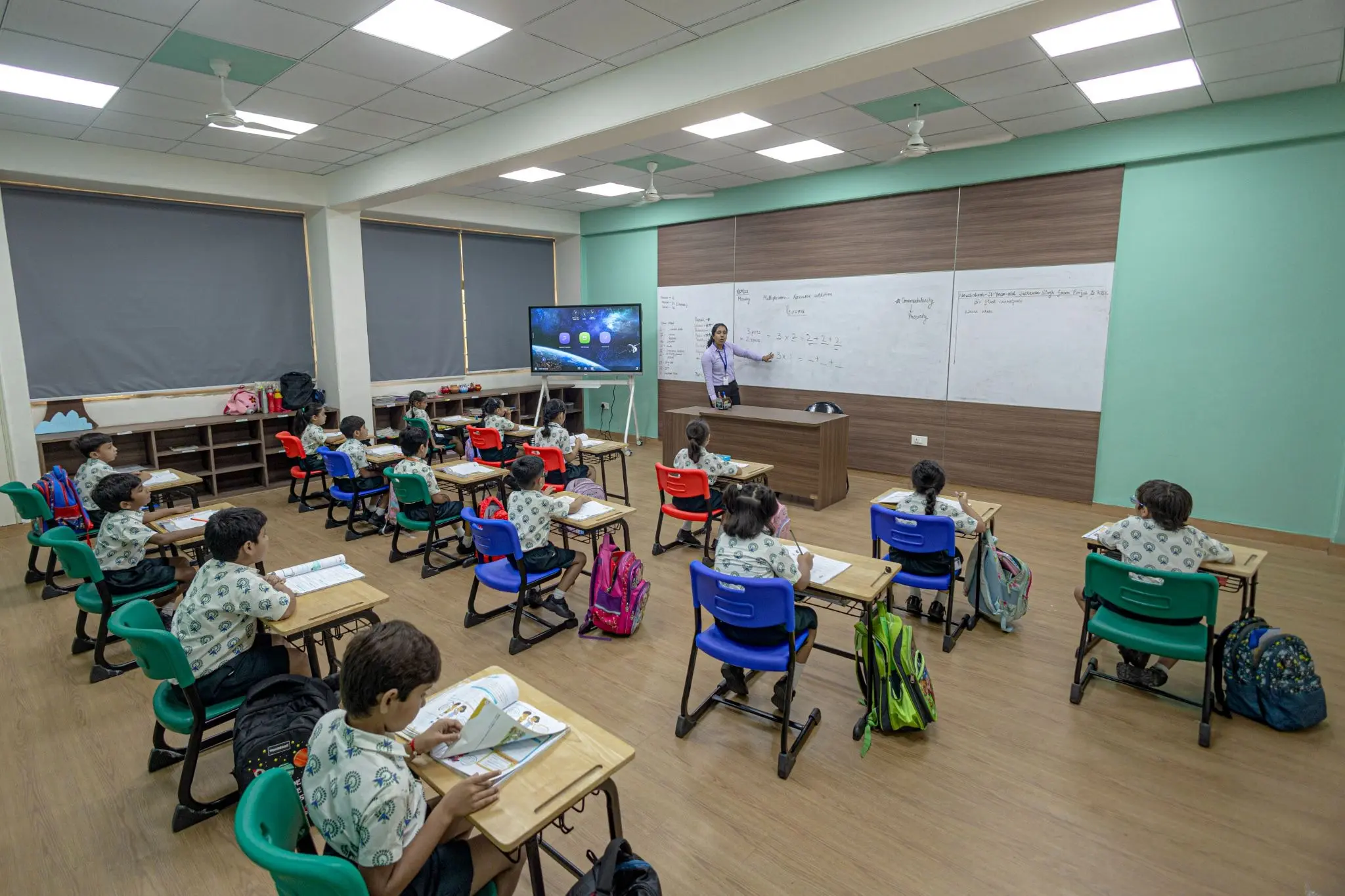
Education is no longer confined to chalk, blackboards, and textbooks. Today, classrooms across the country are embracing technology to make learning more interactive, engaging, and effective. One of the most impactful tools driving this change is the smart board. If you are a parent researching schools or a teacher looking to upgrade your classroom, you must have wondered what the real benefits of smart boards are in the classroom. In this blog, we will walk you through everything you need to know, including how schools like Mayoor School Jaipur are setting a benchmark in modern education by using smart boards as a core part of their classroom experience.
Smart boards, also called interactive whiteboards, are large digital display screens that connect to a computer and a projector. Teachers and students can interact with the board using touch, a stylus, or even their fingers. They can display videos, presentations, digital notes, animations, and much more, all from a single device. And the benefits go far beyond just replacing a traditional blackboard.
One of the biggest challenges teachers face is keeping students engaged throughout the class. Traditional teaching methods can sometimes feel repetitive, and students may lose focus. Smart boards in the classroom change this completely.
With interactive touchscreens, colorful visuals, and multimedia content, lessons come alive. Students can walk up to the board, drag and drop elements, solve problems directly on the screen, or participate in live quizzes. This hands-on approach naturally boosts participation and makes even complex topics easier to understand.
Research consistently shows that students retain information better when they are actively involved in the learning process. Smart boards make that active involvement easy and fun.
Different students learn differently. Some are visual learners, some are auditory learners, and some learn best through hands-on activity. Smart boards cater to all these learning styles at once.
Teachers can display 3D diagrams of the human body, show historical events through videos, demonstrate math concepts with interactive geometry tools, or play educational animations in science. This multi-sensory approach ensures that no student is left behind. The impact of school infrastructure on child development is significant, and smart boards are one investment that directly reflects on how well students absorb, retain, and apply knowledge.
Smart boards are not just beneficial for students; they are a game-changer for teachers, too. Educators can prepare digital lesson plans, save their notes for future classes, and access a library of resources instantly during the lecture.
There is no need to rewrite notes on the board every day. Everything is saved and retrievable. Teachers can also import content from the internet during a live class. If a student asks a question, the teacher can look it up, display it, and explain it right then and there. This real-time flexibility is something traditional teaching simply cannot offer.
Additionally, smart boards support varioustop study techniques for students, allowing teachers to incorporate mind maps, flowcharts, timelines, and collaborative exercises directly into their lessons.
Collaboration is one of the most important skills students need in the 21st century. Smart boards promote group activities, team-based projects, and peer learning. Multiple students can interact with the board simultaneously, working together to solve problems or build presentations.
This is closely aligned with the principles of experiential learning, learning by doing. Schools that prioritise being the best experiential learning schoolunderstand that smart boards are central to delivering this kind of education. When students build knowledge through interaction rather than passive observation, the learning becomes deeper and longer-lasting.
When it comes to smart board integration, Mayoor School, Jaipur, stands out as a shining example. Recognised as one of thebest schools in Jaipur, Mayoor School has equipped its classrooms with state-of-the-art smart boards that are seamlessly woven into daily teaching.
At Mayoor School, teachers use smart boards not just to display content, but to create genuinely immersive learning experiences. From interactive science experiments and virtual field trips to live language exercises and maths problem-solving sessions, smart boards here serve as the bridge between curriculum and curiosity.
The school's approach reflects a broader belief: that the quality of infrastructure directly shapes the quality of education. With smart boards, Mayoor School ensures that every child, whether a visual learner, an auditory learner, or a hands-on learner, gets a personalised and enriching classroom experience.
From the very beginning, even in preschool learning programs, Mayoor School introduces children to interactive learning environments that build confidence and a love for education. This early exposure to technology-aided learning gives students a head start that stays with them throughout their academic journey.
If you are looking to provide your child with a technology-forward education, the admission process of CBSE schools like Mayoor is straightforward. The school warmly welcomes families who value quality education and a stimulating learning environment.
A significant challenge in traditional classrooms is monotony. Doing the same thing every day, textbook, notes, chalk, repeat, can demotivate even the most enthusiastic learner. Smart boards break this cycle.
With interactive quizzes, gamified lessons, real-time feedback, and multimedia presentations, every class feels different and exciting. Teachers who know how to motivate students in the classroom often rely on smart boards as their most powerful tool. The instant feedback that smart boards provide, for example, when a student answers a question on the board and sees the correct or incorrect result immediately, reinforces positive learning habits.
This dynamic environment also helps students with different attention spans stay focused. The visual stimulation combined with physical interaction keeps the brain alert and receptive.
Smart boards make classrooms more inclusive for students with different learning needs. For students who have difficulty reading small text, the large, bright display is far easier on the eyes. For students with hearing impairments, visual content on the board can replace or supplement verbal explanations.
Teachers can also adjust font sizes, highlight important points, zoom into diagrams, and use colour-coded notes to cater to different needs, all in real time. This level of adaptability makes smart boards one of the most inclusive educational tools available today.
A balanced view is always helpful. Here is a quick overview:
Advantages:
Disadvantages:
Despite the disadvantages, schools that have invested in smart boards like Mayoor School, Jaipur, consistently report higher student engagement, better academic outcomes, and more satisfied teachers. The long-term benefits far outweigh the initial challenges.
Smart boards in the classroom are no longer a luxury; they are fast becoming a necessity for schools that are serious about quality education. From boosting student engagement and supporting diverse learning styles to empowering teachers and enabling inclusive classrooms, the benefits of smart boards are clear, measurable, and lasting.
Schools like Mayoor School, Jaipur, show us what is possible when infrastructure and pedagogy come together. By integrating smart boards into every classroom, they are not just teaching; they are inspiring. If you are considering enrolling your child in a school that values modern, interactive, and holistic education, Mayoor School is a name worth exploring.
Technology in education is here to stay, and smart boards are at the heart of that revolution. The question is no longer whether schools should invest in them; it is how quickly they can make it happen for every child.
Smart boards, or interactive whiteboards, are large touch-sensitive display screens connected to a computer. They allow teachers and students to interact with digital content directly on the board, displaying videos, writing notes, solving problems, and running interactive activities during class.
The key benefits include increased student engagement, support for multiple learning styles, better collaboration, real-time internet access during lessons, inclusive teaching, reduced paper use, and the ability for teachers to save and reuse lesson content.
Yes! Smart boards are beneficial for students of all ages, from preschool children who respond well to colourful interactive visuals, to secondary school students engaging with complex subject matter. Schools like Mayoor School, Jaipur, use smart boards across all grade levels, starting from early childhood programs.
Smart boards save teachers significant preparation time by allowing them to create, store, and reuse digital lesson plans. They also enable real-time demonstrations, instant access to online resources, and a variety of teaching formats from videos and quizzes to live annotations, all in one device.
The main disadvantages are the high upfront cost of purchase and installation, the need for teacher training, dependence on reliable electricity and internet, and potential maintenance expenses. However, most schools that invest in smart boards find that the educational benefits significantly outweigh these challenges over time.
Yes, Mayoor School, Jaipur, is one of the leading CBSE schools in the city that has fully integrated smart boards across its classrooms. The school uses interactive technology to deliver engaging, experiential, and inclusive education, starting from preschool programs all the way to senior secondary classes.
You can look for CBSE schools in Jaipur that highlight modern infrastructure on their website. Mayoor School, Jaipur, is widely regarded as one of the best schools in Jaipur and openly showcases its technology-enabled classrooms. You can visit the school's official website or reach out directly to learn about their admission process.

Copyright ©2026 held by Global Institute of Technology Society and Mayoor School Jaipur | This template is made with by Shopivana
